Why Small Business Professionals Need a CRM in 2026 (Not Just REALTORS®)
Introduction
For years, CRM systems were associated almost exclusively with large sales teams and real estate professionals. But in 2026, the landscape has changed.
Consultants, contractors, coaches, creatives, service providers, and growing small businesses all face the same challenge:
Too many leads.
Too many conversations.
Too many moving parts.
Without structure, opportunity leaks quietly through the cracks.
That’s where a modern CRM changes everything.
What a CRM Actually Does (Beyond Contact Storage)
A CRM is not just a digital contact list.
It helps you:
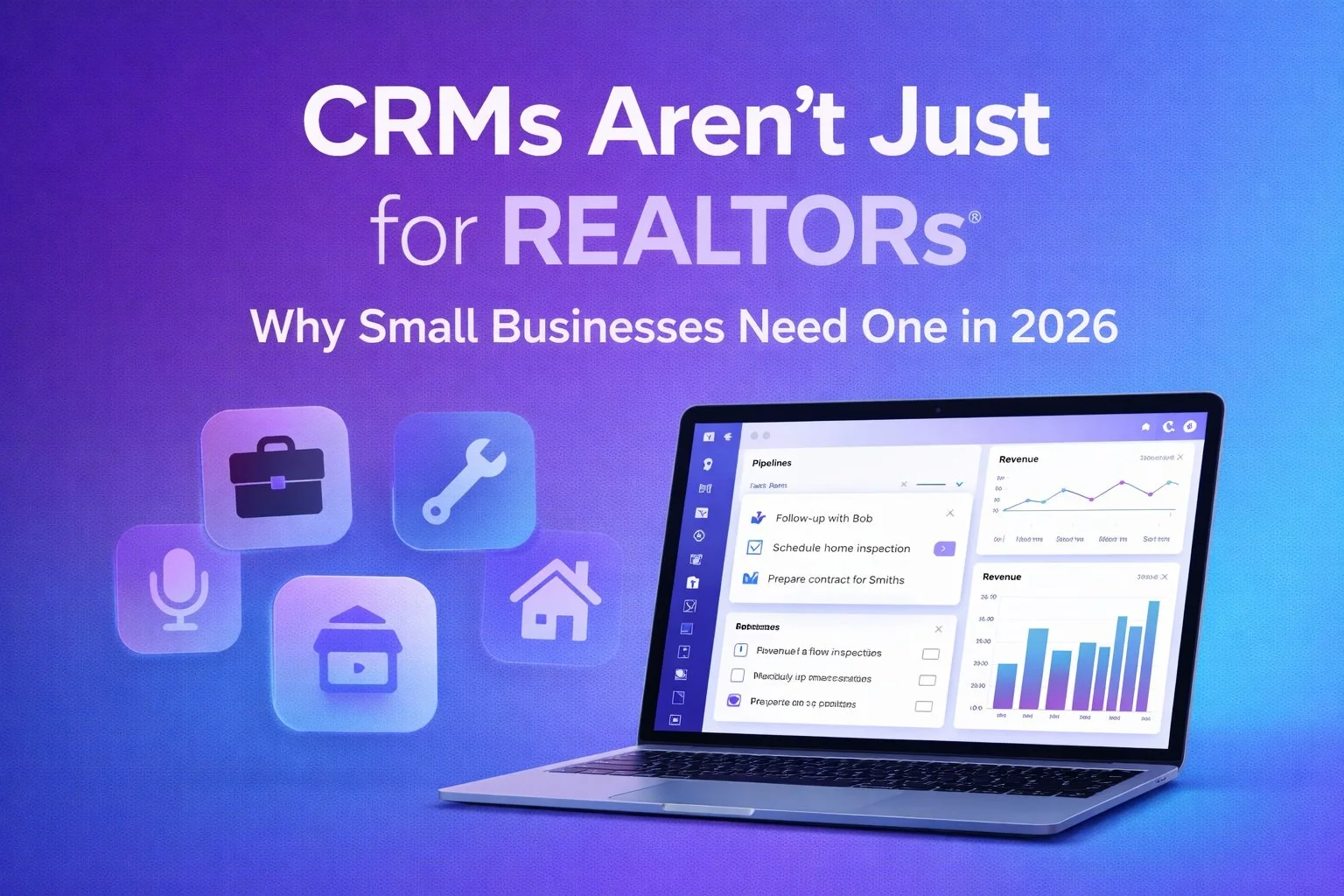
Track leads from first inquiry to signed client
Set automated follow-up reminders
Organize tasks and deadlines
Store documents and communications in one place
Monitor performance and revenue trends
Instead of reacting, you operate with intention.
If you’re still managing clients across spreadsheets, inboxes, and sticky notes, growth becomes harder than it needs to be.
Why Small Businesses Struggle Without One
Small business professionals often assume a CRM is “too advanced” or “only for sales teams.”
In reality, not using one leads to:
Missed follow-ups
Inconsistent communication
Disorganized pipelines
Manual marketing efforts
Lost referrals
When everything lives in separate tools, productivity suffers.
A centralized system reduces friction and increases clarity.
CRM Benefits for Non-Real Estate Professionals
MarketMosaicPro is designed for REALTORS® and service-based professionals, but its structure supports a wide range of industries.
Perfect for:
Consultants
Mortgage brokers
Insurance advisors
Marketing agencies
Trades & contractors
Coaches
Any service professional tracking leads or clients
If your business depends on relationships, you need relationship management infrastructure.
Automation Is the Competitive Edge in 2026
Small businesses that scale efficiently rely on automation.
With a modern CRM, you can:
Schedule email campaigns
Use content libraries and templates
Track engagement metrics
Set recurring workflows
Maintain consistent communication
Instead of working harder, you build systems that work for you.
Explore the full feature set to see how automation and workflow tools simplify daily operations.
Why the Right CRM Matters
Not all CRMs are built for simplicity.
Traditional systems often come with:
Complicated onboarding
Add-on fees
Limited customization
Overwhelming dashboards
Modern platforms prioritize clarity, flexibility, and predictable pricing.
Before choosing a CRM, compare features carefully and understand how it supports your specific business model.
Conclusion
In 2026, a CRM is not optional for small business professionals.
It’s infrastructure.
Whether you're a REALTOR®, consultant, contractor, or creative entrepreneur, having one organized, centralized system can transform how you operate.
If your business runs on relationships, your technology should support them.
Start your free trial and experience a streamlined approach to managing clients, marketing, and growth.
Frequently Asked Questions
-
Yes. Any small business that manages leads, clients, or ongoing relationships benefits from a CRM. Without one, follow-ups get missed, communication becomes inconsistent, and growth becomes harder to manage. A CRM centralizes contacts, tasks, marketing, and performance tracking in one organized system.
-
No. While CRMs were originally built for sales teams, modern platforms support consultants, contractors, coaches, service providers, and entrepreneurs. If your business depends on client communication and repeat business, a CRM improves organization and efficiency.
-
Yes. MarketMosaicPro is designed for REALTORS® and service-based professionals who need structure without unnecessary complexity. It supports lead tracking, task automation, email campaigns, content libraries, and workflow management across multiple industries.
-
Industries that benefit include:
• Real estate professionals
• Mortgage and insurance brokers
• Consultants and coaches
• Marketing agencies
• Contractors and trades
• Service providers tracking recurring clientsIf your business involves nurturing relationships and managing projects, a CRM increases clarity and control.
-
Automation reduces manual work. With automated follow-ups, scheduled newsletters, recurring workflows, and engagement tracking, businesses stay consistent without constantly micromanaging tasks. This frees up time to focus on revenue-generating activities and client service.